Is a Healthcare Career Right for Career Changers Over 30?
“You wake up one day and you say, ‘I have all these things, what now?’”
Career coach Beverly Jones said this while discussing midlife career shifts. It captures a feeling many professionals experience after years in the same field. You may have a steady job, years of experience, and a resume you worked hard to build, yet still wonder if you want to spend another 20 years doing the same thing.
For some people, that question leads to healthcare. A career change to healthcare after 30 can feel like a big move, especially when you have bills, family responsibilities, or a full-time job. At the same time, your years of work experience can give you skills that are useful in healthcare. The key is finding a role and training path that fits your goals.
Why People Switch to Healthcare Careers After 30
For many career changers, the appeal starts with purpose. Healthcare offers plenty of opportunities to work directly with people and contribute to their well-being. That can feel especially meaningful if your current job has started to feel repetitive or disconnected from the people it serves.
Job demand is another practical reason to consider the field. The U.S. Bureau of Labor Statistics projects employment in healthcare and social assistance to grow 8.4% from 2024 to 2034, compared with 3.1% for all occupations. The sector is expected to add roughly 2 million jobs during that period.
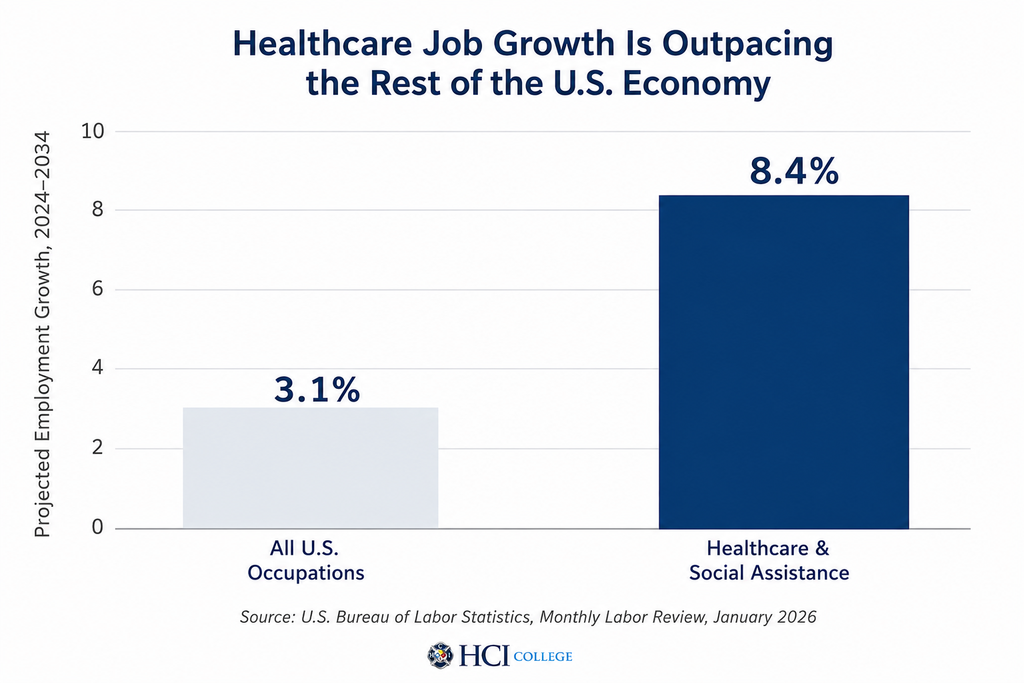
[Alt Text: Comparison of projected employment growth from 2024–2034, showing 3.1% for all U.S. occupations and 8.4% for healthcare and social assistance.]
Healthcare also covers far more than doctors and nurses. Administrative support, medical assisting, health information, patient coordination, project management, and other roles all contribute to patient care. That variety gives career changers room to find a role that connects their existing strengths with a new industry.
The Advantages of Starting a Healthcare Career Later
Starting a second career after 30 comes with something you cannot get from a textbook: experience.
Years spent managing customers, handling deadlines, leading teams, solving problems, or keeping projects organized can carry over into healthcare. A person coming from customer service, for example, may already have strong communication and conflict-resolution skills. Someone from business may bring leadership and organizational experience.
You may also have more clarity about what you want from work. Instead of choosing a career because it was the obvious option at 22, you can make a decision based on the kind of work, schedule, environment, and future you want now.
The training timeline helps too. Many people assume a career change to healthcare after 30 means going back to school for four years, but that isn’t always the case. Often, diploma and certificate programs can help you start a career in healthcare in less than two years, and some are designed around the realities of adult life, including work and family responsibilities.
Common Challenges and How to Overcome Them
Changing careers can be exciting, but it also comes with practical challenges that are worth considering before you make the switch.
- Balancing School, Work, and Family
Going back to school while working or caring for a family takes planning. Look for programs with schedules that match your circumstances, and map out study time before classes begin. Part-time, evening, weekend, or other flexible formats may make the transition easier.
- Adjusting to Being a Student Again
Sitting in a classroom after years in the workforce can feel strange. Your age, however, can work in your favor. You already know how to manage deadlines, communicate with different personalities, and stay accountable when things get difficult.
- Managing the Cost of a Career Change
A new career may mean paying for tuition while temporarily earning less than you did in your previous role. Look at the full cost of the program, available financial aid, payment options, and the likely time required before you can enter the workforce.
- Getting Comfortable With a New Work Environment
Healthcare can involve patient interaction, clinical settings, teamwork, and emotionally difficult situations. Getting firsthand exposure through volunteering, shadowing, or an entry-level healthcare role can help you understand what the work is really like before committing to a program.
How to Choose the Right Healthcare Program
Life as an adult is complex, with obligations and responsibilities that are different for everyone. Studying for a career change will probably mean finding a balance and making compromises, so before choosing a program, ask yourself:
- How quickly do I want to start working in healthcare?
- What type of healthcare role interests me most?
- What credential or license will I need?
- Can I balance the program with work and family?
- What can I realistically afford?
- Does the program offer hands-on training and career support?
Is Healthcare Right for You After 30?
You don’t need to have your entire second career mapped out before taking the first step. Start by asking yourself whether you enjoy helping people, can handle the demands of a healthcare environment, and are willing to complete the training your chosen role requires. Think about your current responsibilities too.
If the answers line up, starting a new career after 30 may be more achievable than you think. If healthcare feels like the right next step, HCI College can help you explore programs designed to prepare students for careers in the healthcare field. Learn more about your options and find a program that fits your goals, timeline, and experience, or you can contact us for more information.
If you found this article helpful, please share it on social media.