Can You Work While Studying Healthcare? What Students Need to Know
For many healthcare students, enrolling in a training program doesn’t happen on a whim. There are bills to pay, families to support, and lives that can’t be put on hold. So the question isn’t just “Can I do this?” It’s “Can I do this while still keeping the lights on?”
The timing couldn’t be better to push through. Nearly 40% of the current nursing workforce plans to leave or retire within the next five years, and the Bureau of Labor Statistics projects healthcare to add roughly 2 million new jobs by 2034. Healthcare students training today are walking into one of the biggest workforce opportunities in a generation.
Can you work while studying healthcare and still succeed? Yes, but it depends on the program you choose, the hours you commit to, and how deliberately you manage the balance.
Is It Realistic to Work During Healthcare Training?
The short answer is: It depends on the program. Healthcare training programs vary widely in intensity and schedule. A diploma program in Medical Assisting or Practical Nursing is structured very differently from a four-year degree, and that matters a great deal when you’re weighing whether to attend school while working.
Some programs are designed with working students in mind. They offer evening or weekend class options, shorter program lengths, and blended schedules that combine online coursework with in-person labs. Others, particularly accelerated degree programs, move quickly and may demand 40 to 60 hours per week of combined studying, labs, and clinicals, leaving little room for outside employment.
That said, many HCI College students have found a balance by choosing programs with manageable credit loads and scheduling their hours thoughtfully. The key is going in with clarity about the demands involved.
4 Common Challenges Students Face
Even with a well-structured program, studying healthcare while working comes with real challenges. Being aware of them ahead of time can help you plan better.
1. Time Management Pressure
Healthcare programs require consistent attendance in class and clinical settings. Add a part-time job on top of that, and your schedule becomes very tight, very quickly. There’s little room for last-minute shift swaps or back-to-back commitments.
2. Energy and Burnout
Healthcare training is physically and emotionally demanding. Working long hours outside of school can drain the energy you need to perform at your best. In fact, according to Mayo Clinic’s State of Well-Being Report, medical students were the only healthcare group whose burnout rates increased in 2023, a reminder that the academic demands of healthcare programs are uniquely taxing.
3. Limited Study Time
Courses in anatomy, physiology, medical terminology, and nursing theory require deep, consistent study. When you’re logging hours at a job, it can become difficult to dedicate enough time to studying, and it shows up in exam results if you’re not careful.
4. Clinical Scheduling Conflicts
Clinicals are non-negotiable. They can’t be rescheduled or skipped. If your job isn’t flexible enough to accommodate these fixed blocks, it can become very problematic.
4 Tips to Balance Work and Study Effectively
Students who successfully work while studying healthcare tend to rely on a few consistent habits. Setting aside time to decompress, sleep properly, and maintain social connections isn’t a luxury. It’s part of performing well. Along with a mental reset, some habits can make the difference between students who thrive and those who burn out.
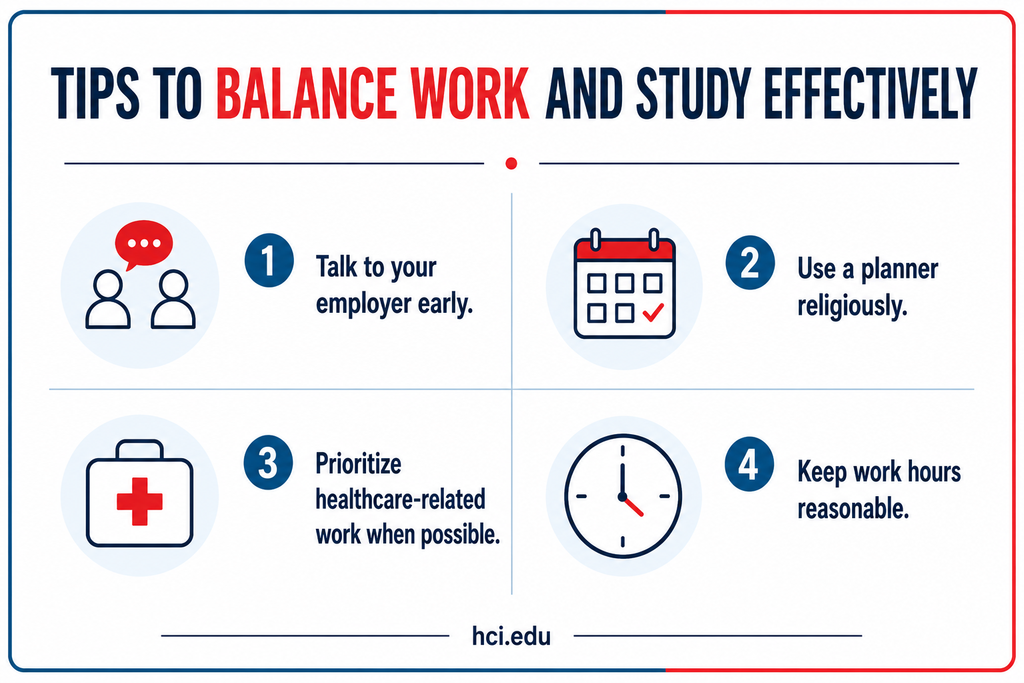
[Alt Text: Tips to Balance Work and Study Effectively featuring four strategies for healthcare students: talk to your employer, plan carefully, prioritize healthcare-related work, and keep reasonable hours.]
- Talk to Your Employer Early
Be upfront with your manager from day one about your student status. Let them know that your academic schedule, especially clinicals, takes priority. Most employers respect that transparency and will work with you on scheduling. The worst outcome is a conflict you didn’t see coming because you didn’t communicate clearly.
- Use a Planner Religiously
Map out your entire week, including class times, lab sessions, clinicals, study blocks, and work shifts. When everything is visible at once, you can spot scheduling conflicts before they happen and protect the time that matters most.
- Prioritize Healthcare-Related Work When Possible
One of the smartest moves you can make if you need to work while studying healthcare is to find a job in the field itself. Roles like home health aide, patient services representative, or medical front desk assistant not only reinforce what you’re learning in the classroom, but also allow you to earn income at the same time. That double return on your time is hard to beat.
- Keep Work Hours Reasonable
Most students who successfully work while studying for their future career keep their paid hours to around 15–20 hours per week. Going beyond that significantly increases the risk of falling behind academically. Part-time or gig-based work (like delivery or remote customer service) can offer the flexibility you need without locking you into a rigid schedule.
Choosing the Right Program for Flexibility
If you know you’ll need to work while taking courses, program selection matters tremendously. Here’s what to look for:
- Condensed Timelines: Shorter programs (under 12 months for diploma tracks) often mean less time juggling school and work simultaneously. You sacrifice a smaller window of your income-earning potential rather than dragging out the balancing act over multiple years.
- Blended or Flexible Scheduling: Programs that combine online coursework with in-person labs and clinicals give you more control over when you study. If your work schedule requires some flexibility, look for schools that don’t require you to be on campus five days a week.
- Externship Support: Programs that include supervised externships as part of the curriculum enable you to complete required clinical hours and gain real-world experience without needing to separately arrange and pay for additional training.
- Smaller Class Sizes and Accessible Faculty: When you’re stretched between work and school, you need to be able to ask questions quickly and get support when you need it. Smaller programs with accessible instructors make that possible.
Start Your Healthcare Career at HCI College
At HCI College, programs are built with practical, career-ready training in mind, structured to help motivated students move through their coursework efficiently without unnecessary delays. Whether you’re interested in Practical Nursing, Medical Assisting, or Veterinary Assisting, each program includes hands-on clinical training alongside classroom or online instruction, so you graduate with both the credentials and the real-world confidence employers are looking for.
If you’re weighing whether you can work while studying healthcare and still succeed, the right program structure makes all the difference. Contact HCI College today to speak with an admissions representative about scheduling, financial aid options, and what to expect from your first year.
If you found this article helpful, please share it on social media.