The Future of Nursing in Florida: Job Demand, Pay & Growth (2025–2030)
If you’re thinking about becoming a nurse in Florida, the timing couldn’t be more significant. The state is in the middle of a slow-building healthcare crisis, one driven not by disaster, but by demographics: Florida’s population is aging faster than nearly any other state in the country. Consequently, its healthcare system is struggling to keep up, which makes nursing one of the most in-demand professions, offering lasting job security, competitive salaries, and a career that will matter more each year.
This article breaks down exactly what the data shows: who is driving demand, how many jobs are expected to open, what nurses can expect to earn, where the best opportunities lie, and what challenges you should know about before you enroll.
Florida’s Aging Population and the Surge in Nurse Demand
Walk into almost any assisted living facility or hospital in South Florida, and you’ll notice something quickly: the patients are older, the needs are more complex, and the staff is stretched.
According to U.S. Census Bureau data via USAFacts, about 21.8% of Florida residents were aged 65 or older in 2024, compared to just 18% nationally. And the gap is widening. Projections from the University of Virginia’s Weldon Cooper Center, reported by Newsweek, put that figure above 25% by 2030, meaning more than one in four Floridians will be a senior within the next five years.
Older adults need more care, more often, across more settings. That sustained pressure is hitting a workforce that is itself aging out. The Florida Hospital Association projects a shortage of approximately 59,100 nurses by 2035. For LPNs specifically, the Florida Center for Nursing reports that demand is growing at 2.3% annually while supply is shrinking at 0.9%, a gap that will only widen if enrollment trends don’t change.
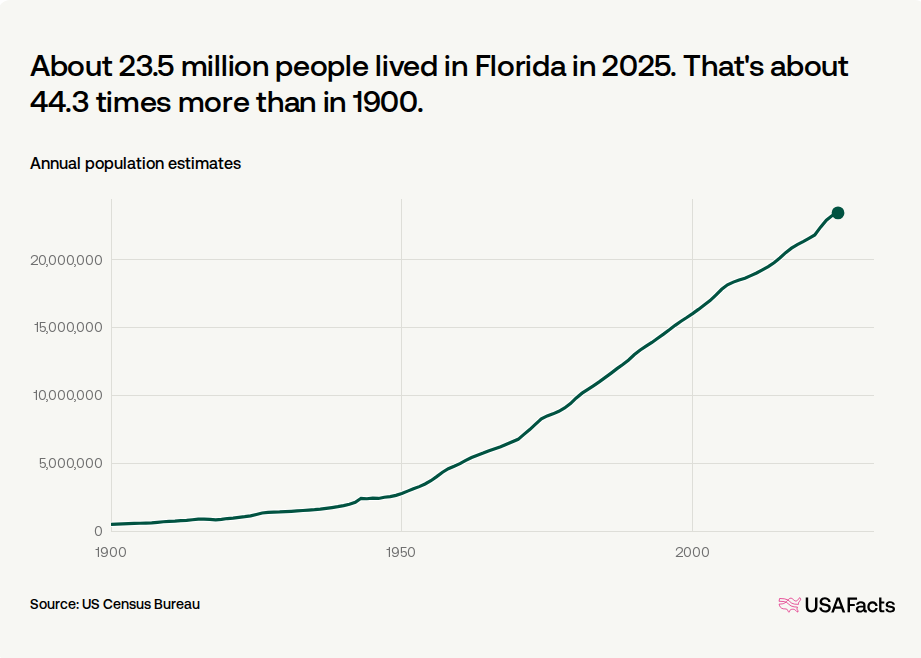
(Alt Text: Florida’s population growth from under 530,000 in 1900 to 23.5 million in 2025, based on U.S. Census Bureau data via USAFacts.)
Projected RN & LPN Job Growth in Florida (2025–2030)
Nationally, the Bureau of Labor Statistics projects 5% RN employment growth from 2024 to 2034 and 3% growth for LPNs over the same period. Florida runs well ahead of both. The Florida Department of Economic Opportunity projects RN growth of approximately 16% through 2030, more than three times the national ten-year rate. For LPNs, the Florida Center for Nursing describes the supply-demand gap as the most severe of any nursing category in the state.
For anyone starting a nursing career, these aren’t abstract projections. They mean faster job placement, stronger negotiating power, and more choice in where and how you work.
Regional and Specialty Variations in Job Opportunities
Not every corner of Florida looks the same when it comes to the nursing profession. South Florida, specifically the Miami, Fort Lauderdale, and West Palm Beach areas, has one of the highest concentrations of Registered Nurse employment and some of the highest median wages in the state, around $85,610. Tampa Bay and Central Florida are growing quickly, with systems like AdventHealth and Tampa General actively recruiting. In rural parts of North and Central Florida, the shortages are most acute, but so are the incentives, including signing bonuses and loan repayment programs for nurses willing to serve those communities.
As for specialties, geriatric care, home health, and long-term care are the fastest-growing areas in a state where the senior population is expanding every year. The American Nurses Association specifically highlights gerontology, primary care, mental health, and home health as the fields most in need of growth, all aligning directly with where Florida is headed.
What Prospective Florida Nurses Must Know Today
The demand is real, but a few things are worth knowing before you enroll.
School choice matters more in Florida than in most states. Florida ranked last among all 50 states in first-time NCLEX pass rates in 2024, driven largely by underperforming private programs. Accredited schools tell a very different story, according to the Florida Center for Nursing, top public programs consistently exceed national averages. Where you train determines whether you’re ready to practice and whether you pass on the first attempt.
If you’re considering the LPN path, entering the workforce sooner is a genuine advantage. With LPN adequacy projected to fall to just 55% by 2037, the market grows more favorable with each passing year, not less.
And financial support is more available than many students realize. Florida’s “Live Healthy” legislation in 2024 allocated $716 million toward healthcare workforce and education initiatives, including loan repayment and training programs aimed at strengthening the state’s nursing pipeline.
Start Your Nursing Career With HCI College
Florida needs nurses, and it needs them to be well trained. At HCI College, we offer an accredited Practical Nursing Diploma and an Associate Degree in Nursing at campuses in Fort Lauderdale and West Palm Beach, putting you at the center of one of Florida’s most active healthcare markets. Contact us today to learn how to get started.
If you found this article helpful, please share it on social media.