How AI Is Transforming Entry-Level Healthcare Jobs for New Graduates
Most conversations about AI in healthcare focus on breakthrough diagnostics or futuristic surgeries. But the biggest changes aren’t always happening in operating rooms or research labs. They’re happening quietly in exam rooms, at front desks, and through digital workflows that new graduates interact with every day.
What many people don’t realize is that some of these AI tools operate almost invisibly. They’re embedded inside electronic health records, call-routing systems, and patient portals, often described as simple “workflow improvements” rather than artificial intelligence.
For new graduates entering entry-level healthcare jobs, this matters. Roles are evolving faster than job titles, and understanding where AI is already shaping day-to-day work can make the difference between feeling replaced by technology and knowing how to work alongside it.
What AI in Healthcare Means for the Workforce
Did you know that “ambient clinical intelligence” tools are already being used to listen to patient–provider conversations and automatically generate clinical notes in real time? These AI systems reduce documentation burden by capturing conversations in the exam room and converting them into structured records.
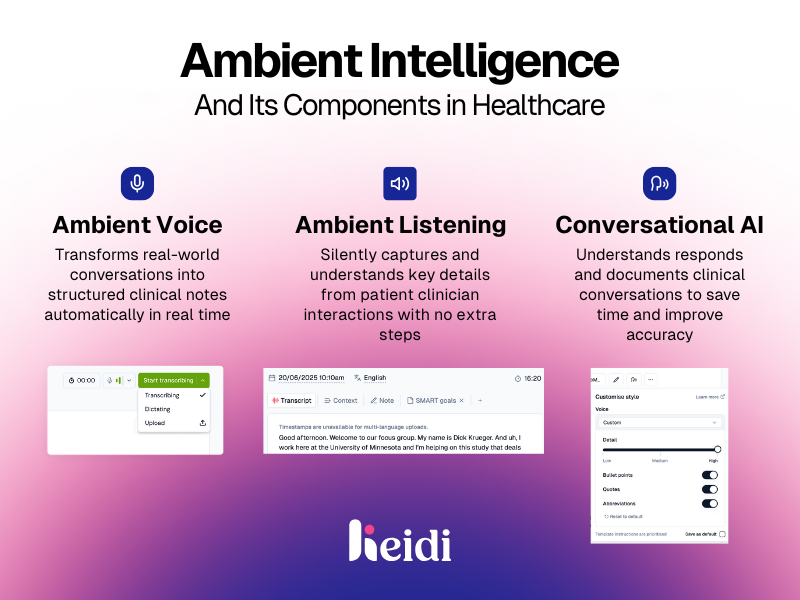
[Alt txt: Infographic showing how AI tools like ambient clinical intelligence reduce documentation workload and support healthcare staff]
This is just one example of a broader wave of AI innovations now entering healthcare, from predictive patient monitoring to automated administrative workflows, all designed to integrate quietly into daily operations rather than replace human staff.
As more tools like these are adopted, the impact on the workforce is clear. AI is taking over repetitive, time-intensive tasks, while healthcare professionals, especially those in entry-level healthcare jobs, are shifting toward oversight, coordination, and patient-facing responsibilities. The result is not fewer roles, but redefined ones that require comfort working alongside intelligent systems.
Balancing Efficiency and Human Expertise
Healthcare organizations are increasingly adopting AI tools to automate administrative workloads, such as:
- Appointment scheduling and reminders
- Claims processing
- Medical coding
- Managing electronic health records (EHRs)
These systems can reduce costs, enhance accuracy, and free personnel to focus on patient care. However, the shift requires staff to adapt and learn new ways of working.
Entry-Level Healthcare Jobs Affected by AI
Many entry-level healthcare roles now support specific stages of AI-enabled clinical workflows, from data entry and documentation to coordination and patient follow-up.
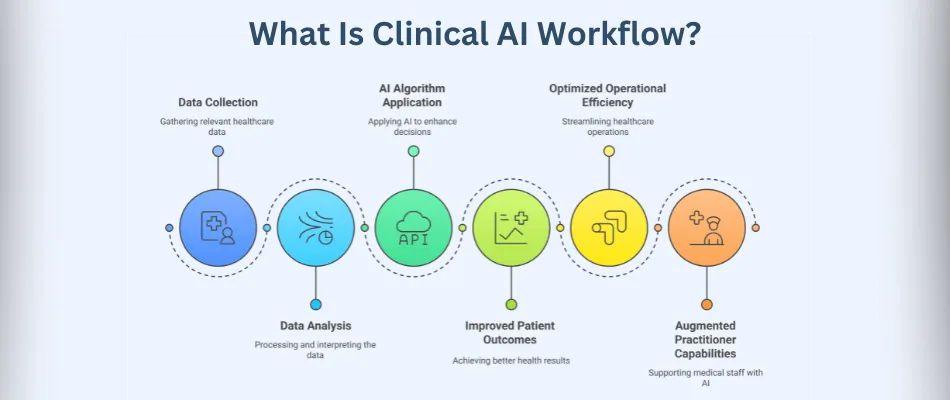
[Alt Txt: Visual overview of an AI-powered clinical workflow, showing how data supports decision-making and patient care.]
For new graduates, AI is affecting some roles more than others. Instead of simply eliminating jobs, the technology is reshaping workforce responsibilities by automating routine tasks and creating new opportunities that blend clinical knowledge with tech fluency.
Medical Administrative Assistants
AI tools are transforming administration by automating repetitive tasks such as data entry, patient scheduling, and billing workflows.
Rather than replacing personnel, machines help staff work more efficiently, allowing new graduates to take on more value-added responsibilities like patient engagement and workflow optimization.
Medical Coding and Documentation
AI-driven coding tools can improve speed and accuracy in translating clinical documentation into billing codes.
While experienced professionals still oversee quality control, entry-level workers who understand AI in healthcare have an edge in handling increasingly automated coding systems.
Clinical Support and Communication Roles
AI chatbots and automated phone systems now handle many first-line patient inquiries, appointment confirmations, and survey follow-ups.
This shift means new graduates may spend more time on complex communication and personalized patient support tasks that require empathy and critical thinking.
What Skills Remain Human-Centric in Healthcare Careers
Even with automation on the rise, technology cannot replace core human-centered skills. Even as AI tools become more capable, human judgment in healthcare remains essential for ethical decision-making, contextual understanding, and patient trust.
Empathy and Patient Interaction
AI can automate scheduling, documentation, and basic patient queries, but it cannot replace human connection. Healthcare Information and Management Systems Society (HIMSS) emphasizes that patient experience and trust remain core quality metrics, even as organizations deploy AI to improve efficiency.
HIMSS workforce research highlights that while automation reduces administrative burden, human interaction remains critical in patient-facing roles, particularly for care coordination, intake, and follow-up, all common entry-level responsibilities.
Critical Thinking and Clinical Judgment
AI excels at pattern recognition, but healthcare rarely follows a single pattern. Unexpected symptoms, incomplete records, or conflicting data still require human reasoning.
According to the World Economic Forum, AI tools perform best when employed by professionals who can interpret outputs, challenge recommendations, and apply clinical judgment, especially in fast-paced care environments.
For new graduates, this means:
- Recognizing when AI-generated alerts need escalation
- Understanding limitations of automated documentation
- Applying situational judgment that algorithms can’t replicate
For example, an AI system may flag a routine abnormal reading, but a trained healthcare worker can recognize when it’s clinically insignificant, or when it signals something more serious.
Ethical and Cultural Awareness
Healthcare organizations adopting AI face increasing scrutiny around data privacy, bias, and transparency. Entry-level professionals are often the first to interact with AI systems in practice, making them essential safeguards against:
- Over-reliance on automated decisions
- Misinterpretation of AI outputs
- Improper data handling
AI can assist decision-making, but accountability always rests with people, not algorithms.
Human–AI Collaboration Is Now a Core Career Skill
The World Economic Forum identifies human–machine collaboration as a top emerging skill across healthcare roles, including entry-level positions. New graduates are better positioned for long-term career growth if they can:
- Navigate AI-enabled EHRs
- Communicate insights from automated tools
- Adapt workflows around digital systems
The bottom line is that the most valuable professionals aren’t those who compete with AI, but those who know how to use it effectively.
4 Ways New Graduates Can Prepare for a Tech-Driven Healthcare Career
As AI in healthcare continues to evolve, aspiring professionals need a proactive strategy for entering the job market.
- Build Foundational Technical Skills
Understanding AI basics, health informatics, and digital tools can set candidates apart in a competitive market, even at the entry level. Employers increasingly value workers who can leverage technology to solve real-world problems.
- Upskill Continuously
Enrolling in certification programs, workshops, or hands-on projects helps graduates develop relevant competencies and stay current with evolving tech trends.
- Gain Real-World Experience
Internships, clinical rotations, and participation in pilot AI healthcare implementations give candidates practical insights that go beyond textbook learning.
- Focus on Soft Skills
Communication, teamwork, and cultural competency remain timeless assets. These human qualities ensure that technology supports, rather than undermines, patient-centered care.
Future Outlook: Where AI in Healthcare Is Headed
AI’s influence on entry-level healthcare jobs will continue to grow, reshaping tasks rather than replacing people. As automation expands, roles will increasingly blend clinical knowledge with technology-enabled decision support.
In the near future, AI is expected to:
- Support faster diagnostics and triage
- Automate more administrative and routine work
- Create new roles focused on AI-assisted clinical operations
For new graduates, success will depend on combining healthcare fundamentals with digital fluency, working confidently alongside intelligent systems rather than competing with them.
At HCI College, our healthcare programs prepare students for these evolving expectations through hands-on training, real-world experience, and career-focused education. If you’re exploring a healthcare career, understanding how technology and human expertise work together can help you take the next confident step forward.
Contact us for more information.
If you found this article helpful, feel free to share it with someone who might be considering a future in healthcare.