Consumerism in Healthcare: How Patients Are Changing the Medical Market
When was the last time you chose a doctor without checking reviews or searching online first? Today, nearly half of American patients research and compare healthcare providers before booking an appointment, a behavior that would have been rare just a decade ago. Healthcare decisions no longer begin in exam rooms; they often start on screens.
- How much does this visit cost?
- Are there better options nearby?
- What do other patients say about their experience?
These are now common questions shaping healthcare choices. This shift toward healthcare consumerism is changing how patients interact with the medical system and what they expect from care. This trend is reshaping how care is delivered, evaluated, and experienced across the medical market.
What Is Healthcare Consumerism?
Healthcare consumerism reflects how patients today are taking a more active role in their care.
This doesn’t mean patients value expertise any less; it means expectations have changed. Patients want clear communication, upfront information, and to feel actively involved in decisions about their health. Convenience, digital access, and overall perspective matter more than ever alongside clinical outcomes.
What Are the Key Drivers of Healthcare Consumerism?
Consumerism in healthcare is not driven by a single trend, but rather by several changes happening at once. Long wait times, unclear billing, limited appointment availability, and complex insurance rules across many health systems have forced patients to navigate care more independently. Together, these factors are pushing patients to take a more active role in decisions that were once left almost entirely to providers.
Cost Transparency and Out-of-Pocket Spending
With high-deductible health plans becoming more common, patients are paying a larger share of medical expenses themselves and want to know prices upfront. Many now expect cost estimates before treatment and compare options based on value, pushing healthcare organizations to improve pricing transparency and billing clarity.
Reputation as a Risk Signal
In healthcare, reviews function as risk signals. Patients often use ratings and comments to assess uncertainty around wait times, communication, billing issues, and follow-up care before choosing a provider. A lack of information or inconsistent digital presence can create hesitation, even when clinical quality is strong. As a result, providers are increasingly judged on how predictable and transparent the care appears, not solely on outcomes.
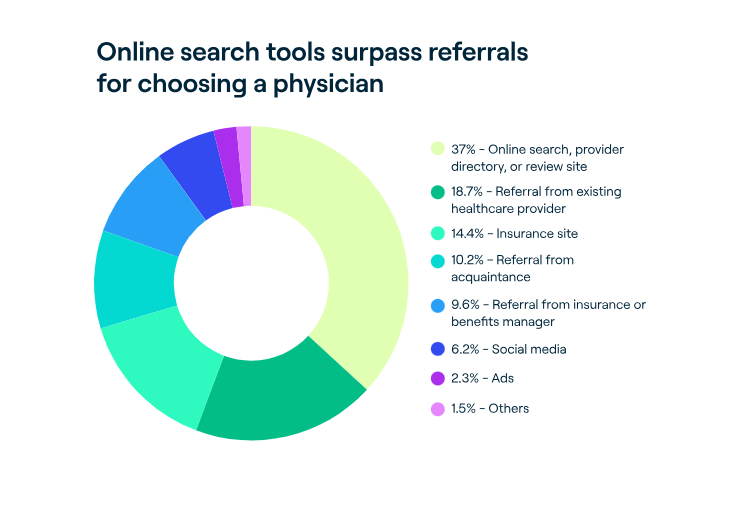
[Alt text: Distribution of how patients choose healthcare providers; online search tools and review sites surpass referrals as the leading decision factor.]
Expanded Care Options and Convenience
Convenience has become a key expectation in modern healthcare consumerism. Urgent care centers, retail clinics, telehealth, and same-day appointments give patients more choices beyond traditional primary care office visits. Virtual care, in particular, has reshaped expectations around access, speed, and flexibility, allowing patients to choose care that fits their lifestyle as well as their medical needs.
The Role of Experience in Healthcare Decision-Making
In a consumer-driven healthcare environment, the patient journey has become a key factor in how care is evaluated and remembered. Beyond clinical outcomes, patients assess how smoothly care fits into their lives, including how easy it is to schedule appointments, understand next steps, and manage follow-up care. Increasingly, these touchpoints shape whether patients return to a provider or look elsewhere.
One emerging shift is the rise of the “digital front door” which includes integrated tools such as patient portals, automated check-ins, AI-powered appointment triage, and real-time updates that guide patients through their care journey.
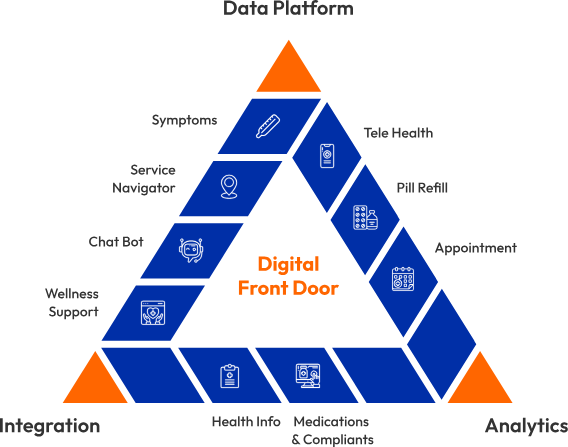
[Alt txt: The healthcare digital front door, showing patient access tools in a series from data platform to analytics and integration.]
These technologies don’t replace providers, but they reduce friction and uncertainty, helping patients feel informed and supported at every stage. As healthcare consumerism continues to grow, experiences shaped by clarity, responsiveness, and seamless digital support are becoming just as influential as clinical expertise in healthcare decision-making.
Impact on Healthcare Professionals
Patient expectations have expanded beyond clinical expertise. While medical knowledge and technical skills remain critical, patients now also evaluate providers based on communication, empathy, transparency, and how clearly care options are explained.
Communication and Digital Skills Matter More Than Ever
Healthcare professionals are expected to discuss treatment options, address cost-related questions, and work confidently with digital tools such as patient portals, telehealth platforms, and online scheduling systems while maintaining meaningful patient interaction.
Patient Engagement Directly Affects Professional Reputation
Online reviews, satisfaction scores, and patient feedback now influence how providers and organizations are perceived, making everyday interactions, follow-ups, responsiveness, and bedside manner much more impactful than ever.
Care Delivery Is Becoming More Collaborative
Professionals are increasingly engaging patients as partners in their care, involving them in decisions rather than simply directing treatment, which helps build trust and long-term relationships.
Adaptability Is A Career Advantage In A Consumer-Driven Market
In the past, empathy was important but often secondary to clinical authority. But now, healthcare professionals who combine strong clinical skills with flexibility, empathy, and patient-centered thinking are better positioned to succeed as healthcare continues to evolve.
How HCI Helps Students Prepare for a Consumer-Driven Market
Healthcare is changing, and so are the skills needed to succeed in the field. As patients take a more active role in their care, consumerism in healthcare is raising expectations for professionals to communicate clearly, adapt to digital tools, and deliver a positive patient journey alongside quality care.
HCI prepares students for this reality by focusing on practical, job-ready skills that reflect today’s healthcare environment. Through hands-on training and patient-centered learning, graduates are better equipped to meet modern patient expectations and step confidently into a healthcare market shaped by choice, transparency, and trust.
Ready to start a healthcare career that puts patients first? Explore HCI programs designed for today’s consumer-driven healthcare environment. Contact us to learn more.
If you liked this blog, please share it on social media.