How to Get a Veterinary Assistant Job With No Experience
So many animal lovers dream of working in a vet clinic but feel discouraged because they have no prior experience. The good news: the role of a veterinary assistant is not only achievable, but it’s increasingly in demand. According to the Bureau of Labor Statistics, jobs for veterinary assistants and laboratory animal caretakers are projected to grow by 9% between 2024 and 2034 — much faster than the average for all occupations.
In this blog, we’ll walk you through what veterinary assistants do every day, how you can build experience through volunteering or internships, the certifications that help you stand out, and, ultimately, how to land your first vet clinic job with no experience.
What Do Veterinary Assistants Do Each Day? (Roles & Responsibilities)
The work of a veterinary assistant (or veterinary support assistant, VSA) blends medical support with customer service and hands-on animal care, making it one of the most dynamic entry-level veterinary clinic jobs out there.
A typical day for a veterinary assistant involves a mix of patient care and behind-the-scenes duties. Some common veterinary assistant responsibilities include:
- Preparing exam rooms and organizing medical supplies before appointments
- Cleaning cages, kennels, and surgical instruments to maintain a hygienic environment
- Feeding, bathing, and exercising animals under supervision
- Assisting veterinarians and vet techs during exams, treatments, or minor surgeries
- Comforting and safely restraining animals during procedures
- Updating medical records and entering patient information into clinic systems
- Communicating with pet owners about treatment plans, post-care, or scheduling
- Processing basic lab samples such as stool, urine, or blood under supervision
To succeed as a veterinary assistant, you’ll need strong communication and teamwork skills, compassion, patience, and the ability to stay calm under pressure, especially when animals are in distress. Physical stamina also matters, since you may spend long hours on your feet or need to lift animals safely. Developing these veterinary assistant skills early can help you stand out when applying for your first clinic role.
It’s common to confuse a veterinary assistant with a veterinary technician, but there’s a key difference. A veterinary tech typically holds a formal degree or certification (such as the VTNE), and performs advanced clinical tasks like taking X-rays or administering anesthesia. In contrast, a veterinary assistant focuses on supportive care and operational tasks, making it the perfect starting point for those entering the field with no prior experience.
According to recent data, veterinary assistants earn an average of around $38,990 per year, with opportunities for higher pay in specialty clinics and emergency hospitals.
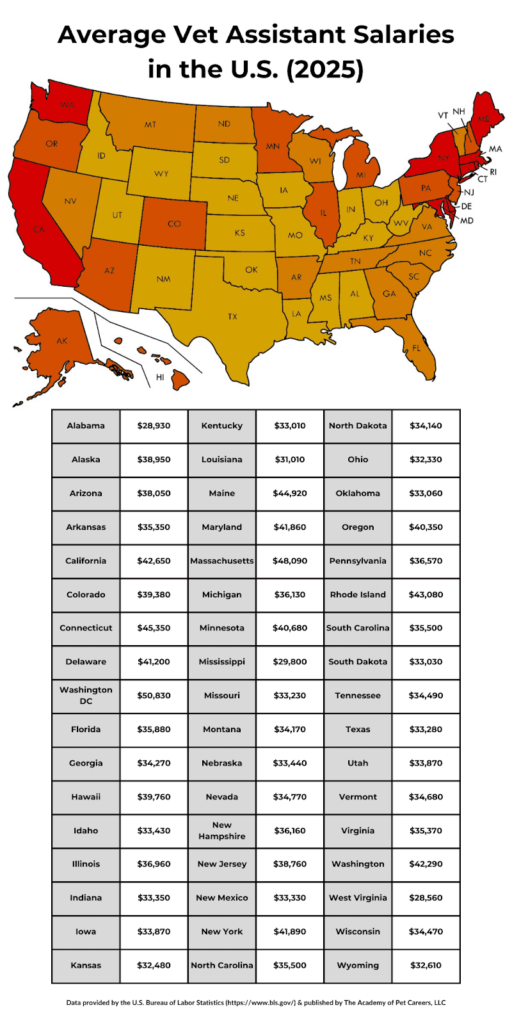
[Alt text: Map of the US with corresponding vet tech salaries for many states]
Volunteer and Internship Opportunities for Aspiring Veterinary Assistants
Getting your first veterinary assistant job with no experience often starts with one simple step: volunteering. Most clinics and animal care facilities value enthusiasm and reliability even more than credentials, especially when you’re just starting out. Volunteering not only helps you gain hands-on experience with animals, but also shows employers that you’re committed to learning and growing in the field.
Here are a few great ways to start building your resume and confidence:
- Animal shelters and rescue centers: These are the easiest places to begin. You’ll help clean enclosures, feed animals, assist with basic care, and observe medical treatments. This gives you valuable experience in animal handling and sanitation (both essential veterinary assistant skills).
- Veterinary clinics and hospitals: Some clinics welcome volunteers or part-time interns who can help with basic tasks like cleaning exam rooms, greeting clients, or comforting pets before treatment. Even a few hours a week can make your resume stand out.
- Wildlife rehabilitation centers and farms: These roles expose you to a wide variety of species and care settings, strengthening your understanding of animal behavior and handling.
- Pet boarding facilities and grooming centers: They offer practical exposure to animal hygiene and care routines that directly translate to vet clinic work.
Many training and diploma programs also include externships or internships as part of their curriculum. These supervised placements give you the chance to gain real-world experience in a veterinary setting before applying for paid positions. This hands-on exposure can help you stand out when competing for entry-level roles.
If you’re not sure where to begin, start by reaching out to local shelters, clinics, or animal welfare organizations and ask if they accept volunteers or job-shadowing students. Even short-term opportunities can help you build confidence, strengthen your resume, and show potential employers your dedication to animal care.
Certifications That Help You Stand Out
While you don’t need a license to work as a veterinary assistant, having the right training or certification can make a big difference, especially if you’re entering the field with no prior experience. Employers often look for candidates who already understand basic animal handling, medical terminology, and clinic procedures. That’s where a veterinary assisting diploma program can give you a real advantage.
A formal certification shows that you’ve completed structured learning in areas like:
- Animal anatomy and physiology
- Veterinary medical terminology
- Office and clinical procedures
- Animal nursing and surgical preparation
- Safety, sanitation, and infection control
Launch Your Veterinary Assistant Career With Confidence
Breaking into the veterinary field without prior experience is achievable with the right mix of compassion, training, and initiative. Whether you’ve volunteered at a local animal shelter or helped care for pets at home, every bit of hands-on exposure adds to your readiness for a clinic environment. Pair that with a recognized diploma, and you’ll have the tools and confidence to start strong.
At HCI College, the Veterinary Assisting Diploma program is designed for students who want to start their animal care careers quickly. The 35-credit-hour program can be completed in about 10 months and includes both classroom and hands-on training. Students also complete an externship, gaining 180 hours of real clinical experience alongside veterinarians and animal care teams.
By the time you graduate, you’ll not only have a strong foundation in veterinary science but also the confidence that comes from working directly with animals in a professional setting. Contact us for more information today.
If you found this article helpful, please share it on your social media channels.