Home-Based Care: The Fastest-Growing Setting for Nurses in 2026
What if your next nursing shift started in a patient’s living room rather than a bustling hospital unit? What if your role allowed you to develop deeper connections with patients while supporting their long-term health and recovery? And what if one of the fastest-growing areas of healthcare wasn’t in a hospital or clinic, but in patients’ homes?
Home-based care is quickly reshaping where and how nurses deliver patient care. As demographics shift, technology advances, and healthcare systems look for smarter ways to serve aging populations, the demand for skilled home health nurses is surging like never before. Whether you’re a new nursing graduate exploring your options or an experienced RN looking for a change, understanding this trend could redefine your entire career path.
Why Home-Based Care Is Growing Rapidly
Several healthcare trends are fueling the rise of home-based care in 2026.
The biggest factor is demographics. As the population ages, more people are living with chronic conditions that require ongoing monitoring and support. Many older adults prefer to age in place rather than move into nursing homes or assisted living facilities.
According to the U.S. Bureau of Labor Statistics, employment of home health and personal care aides is projected to grow by 17% between 2024 to 2034, much faster than the average for all occupations.
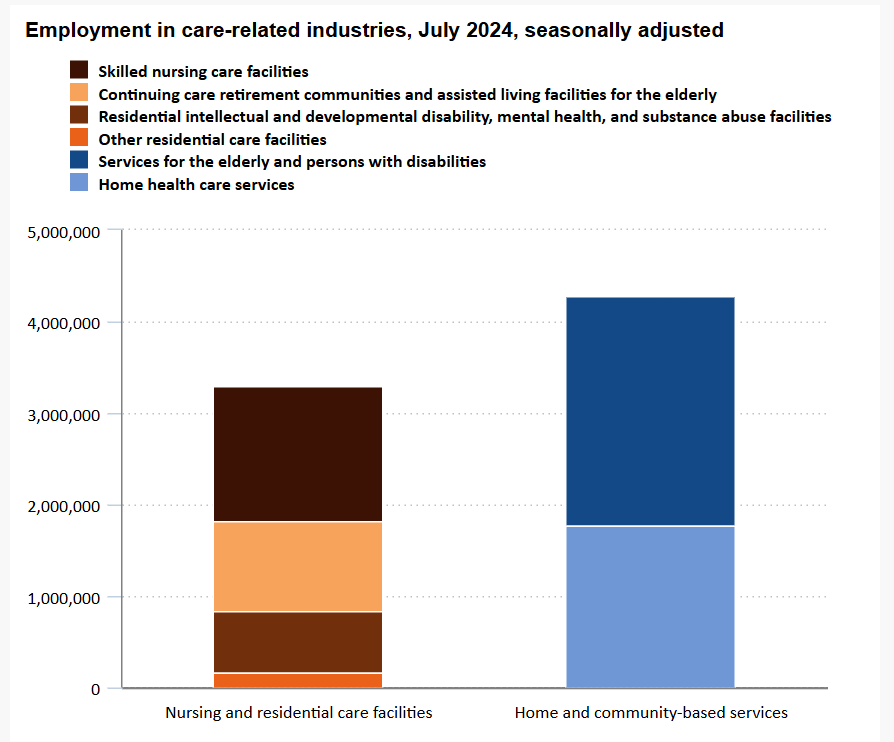
[Alt Text: Bar chart comparing employment in care-related industries as of July 2024, seasonally adjusted.]
Healthcare systems are also under pressure to reduce costs while improving patient outcomes. Treating patients at home is often less expensive than extended hospital stays or institutional care. As a result, hospitals, insurers, and government programs are investing more heavily in home-based care models.
Technology has accelerated this shift. Remote patient monitoring devices, telehealth platforms, connected medical equipment, and digital health records now allow nurses and providers to track patient conditions without requiring frequent clinic visits. Recent CMS initiatives continue to encourage greater use of digital quality measurement, interoperability, and health IT within home healthcare programs.
Another growing trend is “hospital-at-home” care. These programs allow eligible patients to receive hospital-level treatment in their homes while remaining under close medical supervision. As evidence continues to show positive patient outcomes and improved satisfaction, more healthcare organizations are expanding these programs.
What Nurses Do in Home Care Settings
Home health nurses provide skilled clinical care to patients recovering from surgery, managing chronic illnesses, receiving rehabilitation services, or coping with complex medical conditions.
Their responsibilities often include:
- Assessing patient health and monitoring progress
- Administering medications and treatments
- Managing wound care
- Educating patients and family caregivers
- Coordinating with physicians and healthcare teams
- Monitoring medical equipment and devices
- Identifying early signs of complications
Because nurses work directly within a patient’s home environment, they often gain a more complete understanding of the patient’s daily challenges, support systems, and overall health needs.
Home care nurses may serve patients with conditions such as heart disease, diabetes, COPD, cancer, neurological disorders, or post-surgical recovery needs. They frequently care for patients who would otherwise require repeated hospital visits.
Benefits and Challenges of Home-Based Nursing
Like any nursing specialty, home care offers both rewards and challenges.
| Benefits | Challenges |
| Greater autonomy: Home care nurses often work independently, make clinical decisions on the spot, and manage their own schedules. | Working independently: Without immediate access to colleagues or specialists, nurses must feel confident making assessments and decisions on their own. |
| Stronger patient relationships: Regular one-on-one interactions allow nurses to build trust and gain a deeper understanding of patients’ needs. | Travel requirements: Moving between patient homes can create scheduling challenges and increase time spent on the road. |
| Personalized care: Seeing patients in their home environment helps nurses tailor education, treatment plans, and support more effectively. | Variable home environments: Every home presents different conditions, requiring nurses to adapt while maintaining safety and quality care. |
| Improved patient comfort: Many patients feel more relaxed and engaged when receiving care in familiar surroundings. | Technology demands: Home care nurses must stay comfortable using telehealth platforms, remote monitoring tools, and digital documentation systems. |
| Growing career opportunities: As healthcare shifts beyond hospitals, home care continues to create new nursing roles and advancement paths. | Complex care coordination: Nurses often act as the link between physicians, therapists, caregivers, and other healthcare professionals. |
Skills Needed to Succeed in Home Care Nursing
Home care nurses need a blend of clinical expertise and interpersonal skills to thrive in independent care settings.
- Strong Assessment Skills
Nurses often work without immediate access to a larger care team, making it essential to identify changes in a patient’s condition quickly.
- Communication and Education Skills
A major part of the role involves teaching patients and caregivers how to manage medications, treatments, and recovery plans.
- Time Management
Home care nurses frequently travel between patients and must balance scheduling, documentation, and clinical responsibilities.
- Technology Proficiency
Comfort with telehealth platforms, electronic health records, and remote monitoring tools is becoming increasingly important.
Ready to Meet Healthcare Where It Lives?
The hospital will always have its place, but the future of nursing is increasingly being written at kitchen tables, in quiet bedrooms, and alongside patients who simply want to heal at home. For nurses who value independence, meaningful relationships, and the freedom to practice with purpose, home-based care is a calling.
At HCI College, our nursing programs are designed to prepare you for the full spectrum of modern healthcare, including the fastest-growing settings like home-based care. If you’re ready to build a career that goes beyond the hospital walls, contact us today to learn more.
If you found this article helpful, please share it on social media.