The Role of Simulation Labs in Preparing Healthcare Students for Real Patients
Imagine a healthcare student walking into a patient’s room for the first time. The patient suddenly begins to struggle to breathe, alarms start sounding on the monitor, and the student must decide what to do next.
Moments like these are common in healthcare settings, but they can be overwhelming for students who have only learned in classrooms. That’s why the role of simulation labs has become so vital in modern healthcare education.
In fact, a recent study found that 75% of healthcare students said patient simulators significantly improved their learning experience, while 68% reported better communication skills with patients after simulation training.
What Is a Simulation Lab?
Simulation labs are specialized learning environments where healthcare students practice clinical skills and respond to realistic scenarios in a controlled, realistic setting before working with real patients. Instead of learning only through lectures or textbooks, students interact with advanced equipment, patient mannequins, and simulated medical scenarios that mirror what they will encounter in hospitals, clinics, and emergency settings.
These labs are designed to recreate real healthcare environments as closely as possible. Students may practice tasks such as:
- Checking vital signs
- Administering medications
- Performing patient assessments
- Responding to emergencies
By practicing procedures repeatedly in a simulation lab, students develop both technical skills and clinical decision-making abilities without the risk of harming patients.
Innovative Technologies in Modern Simulation Labs
Many modern healthcare training programs are also integrating advanced simulation technologies to make learning even more realistic.
- High-Fidelity Patient Mannequins: These lifelike mannequins can simulate breathing, heart sounds, pulses, and even medical complications. Instructors can adjust the mannequin’s condition in real time, helping students practice diagnosing and responding to changing patient conditions.
- Virtual Reality (VR) Simulations: VR tools help students immerse themselves in complex clinical environments, such as operating rooms or emergency departments, where they can practice procedures and decision-making in a fully interactive setting.
- Scenario-Based Simulation Software: Digital simulation platforms allow educators to design complex medical scenarios, from routine patient assessments to high-pressure emergency responses, helping students develop critical thinking skills.
Even when institutions use different levels of technology, the objective remains the same: prepare healthcare students to respond confidently and competently when they encounter real cases.
3 Benefits of Simulation Training in Healthcare
This hands-on approach helps bridge the gap between classroom learning and real-world patient care, allowing students to build competence gradually in a supportive setting.
- Building Clinical Confidence
One of the biggest advantages of simulation labs is that they help students develop confidence in their abilities. In traditional learning environments, students may only observe procedures before performing them during clinical placements. Simulation labs, however, allow students to actively practice tasks such as patient assessments, administering medications, or responding to changes in a patient’s condition. Repeated practice helps students become more comfortable performing these skills, so when they enter real clinical settings, they feel more prepared to take action.
- Improving Patient Safety Through Practice
Another role of simulation labs is to create a safe environment where students can learn from mistakes without risking patient harm. Healthcare training often involves complex procedures and critical decision-making. By practicing in simulated scenarios, students can test different approaches, receive instructor feedback, and refine their skills before applying them in real patient situations.
Research has consistently shown that simulation-based training improves students’ clinical examination and diagnostic abilities. The chart below highlights how students demonstrated measurable improvements in skills such as cardiac and pulmonary assessment after participating in simulation training.
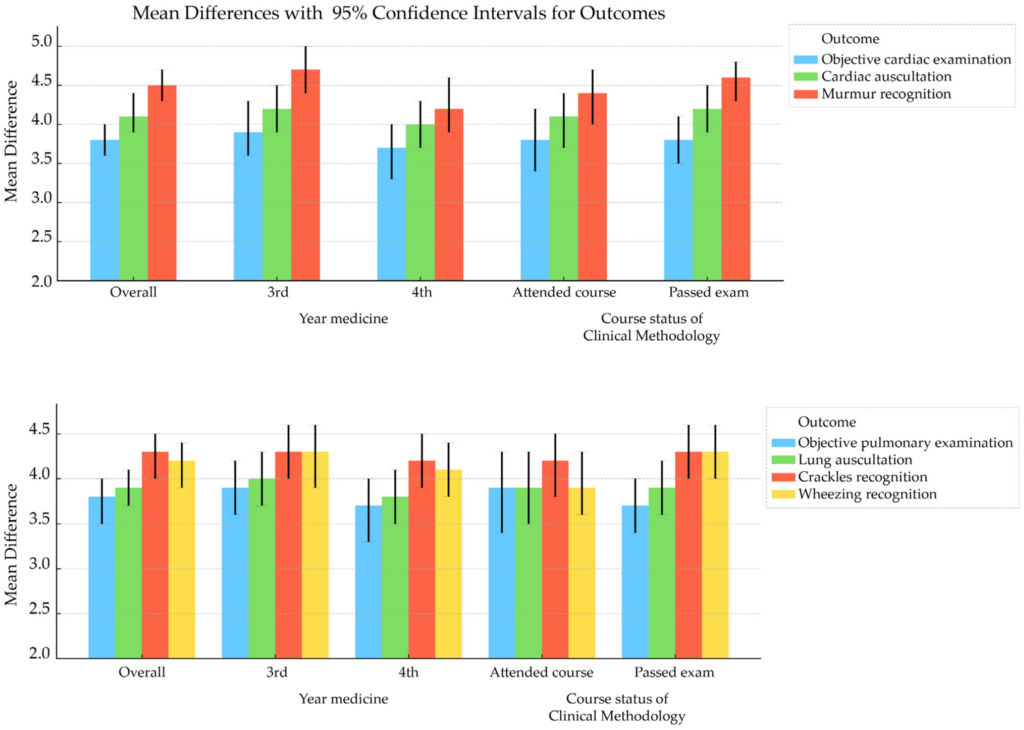
[Alt Text: Simulation-based training improved students’ clinical examination and diagnostic skills, including cardiac and pulmonary assessment abilities.]
- Developing Critical Thinking Under Pressure
Healthcare professionals often need to make decisions quickly, especially during emergencies. Simulation scenarios allow students to experience these high-pressure situations in a controlled environment. For example, students may be asked to respond to a patient experiencing sudden respiratory distress or a rapid drop in blood pressure. These scenarios encourage students to analyze symptoms, prioritize actions, and collaborate with team members. Through these experiences, students are able to strengthen their clinical judgment and problem-solving skills.
- A Safe Space to Learn and Improve
The most valuable aspect of simulation training is that it provides a supportive environment for learning. Students can practice procedures multiple times, ask questions, and receive guidance from instructors without the stress of affecting real patient outcomes. After a simulation exercise, educators often conduct debriefing sessions where students review their decisions, discuss what worked well, and identify areas for improvement. This continuous feedback loop helps students refine both their technical skills and their professional judgment before entering real healthcare settings.
Types of Scenarios Students Experience
The role of simulation labs in healthcare education includes exposing students to a wide range of clinical situations before they work with actual patients.Students may practice patient deterioration scenarios in which they must recognize early warning signs and respond quickly to changes in a patient’s condition. They may also train for high-risk emergencies, such as cardiac arrest or severe allergic reactions, situations that students may not always encounter during regular clinical rotations.
Many simulations are also team-based, allowing students to practice communication and coordination with other healthcare professionals. These are skills employers look for in entry-level healthcare professionals and are an essential part of delivering safe and effective patient care.
HCI’s Simulation Lab Approach
At HCI College, the role of simulation labs is central to preparing students for real-world healthcare environments. The college’s simulation labs are designed to mirror clinical settings, allowing students to practice skills using advanced mannequins and medical equipment that replicate patient conditions.
Through a learning approach that combines classroom instruction, simulation-based training, and hands-on clinical experience, students can build their skills step by step. This structured training helps ensure that when students begin working with real patients, they do so with greater confidence, competence, and readiness.
Here is a sneak peek into the nursing simulation at HCI: HCI College – WPB Nursing Simulation
If you like this blog, please share it with your friends.