How Male Nurses Are Filling the Healthcare Staffing Gap
Every hospital shift begins with the same truth: patients can’t wait. Yet across the country, there aren’t enough nurses to meet them at the bedside. The United States is facing a historic nursing shortage, one intensified by retirements, burnout, and an aging population. Behind these numbers is a ripple effect for the current workforce:
- Longer shifts
- Heavier workloads
- Teams stretched to their limits
But a quiet change is happening in the middle of this crisis. More men are stepping into nursing, drawn not just by job demand but by purpose. They’re entering classrooms, simulation labs, and hospitals once seen as women-led spaces, and proving that care, leadership, and strength don’t depend on gender.
The Rising Demand for Nurses Across the Country
Let’s start with the big picture. The U.S. Bureau of Labor Statistics projects about 189,100 openings for registered nurses every year through 2032.
That’s not a gap, that’s a canyon.
Why Is There a Nursing Shortage?
Many nurses are retiring, and fewer young professionals are entering the field fast enough to replace them. Add post-pandemic burnout, and the challenge becomes even clearer.
What Does the Shortage Mean for Aspiring Nurses?
The nursing shortage means opportunity. Every unfilled position is an open door for someone ready to make a difference. And that includes more men, who are discovering that nursing isn’t just meaningful, but also stable and well-paying.
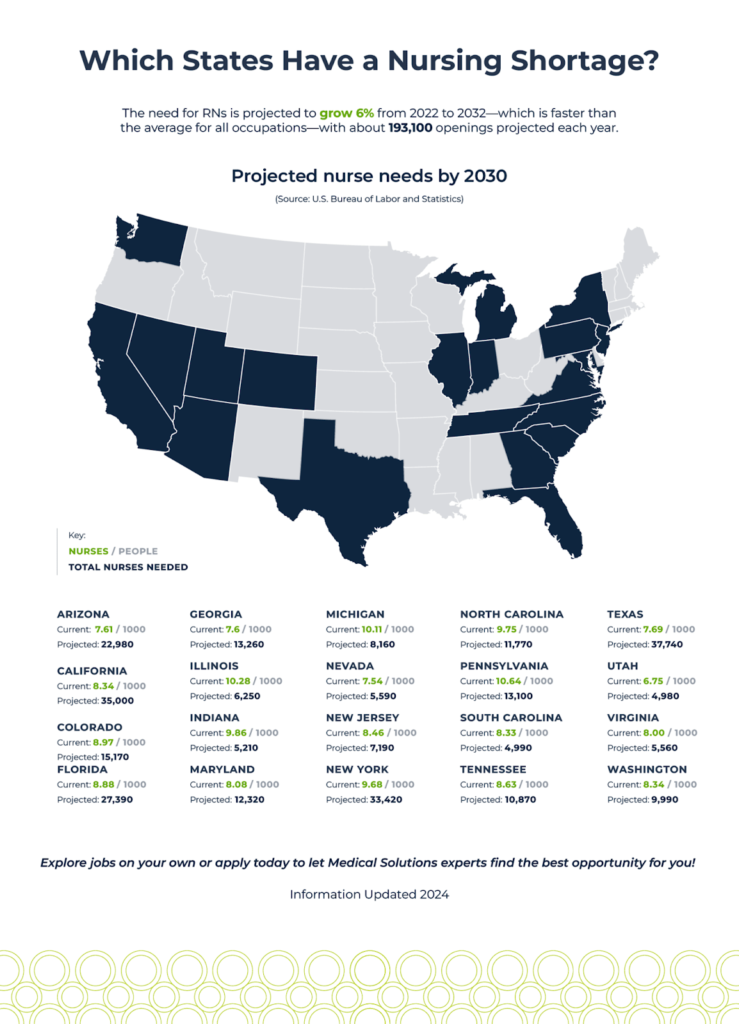
[Alt Text: Infographic map showing the projected nursing shortages by U.S. state through 2030]
The visual gives a clear picture of how widespread the issue really is. From Florida and Texas to California and New York, every region is feeling the pressure. That’s why expanding the nursing workforce and making it more inclusive has never been more critical.
Why Male Nurses Are Crucial to Solving Staffing Shortages
According to a 2023 National Council of State Boards of Nursing (NCSBN) study, the U.S. healthcare system is facing one of its most severe nursing shortages in decades. Nearly 100,000 registered nurses left the workforce during the pandemic, and an additional 610,000 are expected to exit by 2027 due to stress, burnout, and retirement.
These numbers highlight how urgent the situation has become and why expanding diversity in nursing is essential to rebuilding the workforce. To sustain patient care and keep hospitals running, the industry needs not only more nurses but also greater diversity and representation within its ranks. That’s where male nurses are helping make a tangible difference.
Expanding the Workforce
The challenge: Thousands of nursing roles remain unfilled each year.
The solution: Expand the audience who sees nursing as a viable, respected career.
By welcoming more men into the profession, healthcare systems can tap into a broader pool of skilled caregivers. Every new male nurse entering the field helps fill critical vacancies, from bedside care to advanced practice. This ensures that the patients receive timely and high-quality treatment.
It’s about building a stronger, more balanced workforce that can meet rising patient demand head-on.
Enhancing Patient Care and Trust
Some patients, especially men, feel more comfortable discussing sensitive issues with a same-gender caregiver, particularly when sharing personal details or discussing sensitive health issues. A team that includes both male and female nurses allows patients to choose who they’re most comfortable with, building trust, openness, and better communication.
Enriching the Profession
Male nurses bring unique strengths that go beyond clinical skill. Many thrive under pressure, show natural leadership in emergencies, and offer different problem-solving and communication styles that elevate team performance.
In physically demanding areas like critical care, surgery, or emergency response, additional physical strength can also be a practical asset, especially when assisting patients or handling operating equipment.
The result? A richer, more adaptive nursing culture that blends empathy with efficiency and emotional intelligence with technical expertise.
Promoting Inclusivity and Equality
For decades, nursing was seen as a “woman’s profession.” But today, every man who chooses nursing helps dismantle that stereotype. Their visibility sends a powerful message: caring and competence aren’t gendered traits — they’re professional ones.
A gender-diverse nursing team fosters collaboration, empathy, and innovation. When different perspectives come together, decision-making improves, creativity expands, and patient outcomes strengthen.
That’s why encouraging more men to enter nursing isn’t just about solving a staffing shortage; it’s about reshaping the future of healthcare into one that’s inclusive, balanced, and built for everyone.
How Healthcare Schools Are Encouraging Diversity
Diversity begins in the classroom. Students learn in settings that bring together people of different ages, experiences, and goals, mirroring the communities they will one day serve. Instructors emphasize teamwork, cultural awareness, and empathy, helping every future nurse build the confidence and communication skills needed for patient-centered care.
Many colleges encourage mentorship and visibility initiatives. Groups like the American Association for Men in Nursing (AAMN) provide networking, role models, and peer support that help male nursing students feel seen and supported. Simulation labs, hybrid learning, and flexible schedules make it easier for working adults to join and stay in nursing programs and overcome the challenges of becoming a nurse while balancing work and family responsibilities.
At HCI College, diversity is part of the learning environment itself. Through inclusive classrooms, accessible schedules, and hands-on clinical training, HCI prepares all students, men and women alike, to succeed in a field that depends on teamwork, empathy, and skilled care.
The Future of Nursing: How Male Nurses Strengthen Healthcare
The nursing shortage is one of the most pressing challenges in modern healthcare, but it is also creating new opportunities for change. As more men enter the field, the nursing profession is becoming stronger with teamwork, inclusion, and innovation.
As the nursing field continues to evolve, colleges and educators play a vital role in shaping this transformation. Programs that welcome students from all walks of life ensure that the next generation of nurses is prepared to deliver skilled, compassionate care.
Start your nursing journey with HCI College and gain the skills, confidence, and compassion to thrive in a field that needs you now more than ever.
Real Stories from HCI College Graduates

“To be truthful. I did not know what to expect coming to HCI. However, through all the trials and tribulations I stayed firm on one belief, I WILL get my license. Even through working full time with fire rescue and through the different “speed bumps” we had to overcome in classes, I stayed studied up and prayed up. Through Him all things are able and if you apply yourself, you too, will see that light at the end of the tunnel. Is HCI hard? No doubt. But because of the difficulty in educating their students, I was able to pass my NCLEX on the FIRST try at only 85 questions. Keep your eyes on what truly matters, and you’ll be alright. You ready for the ride?” ~Giovanni Prato, HCI College Graduate
If you like this article, please share it with your friends.